
Hey Lahore, Karachi, Islamabad—this is your big‑brother solar consultant talking. If you’re staring at three inverter boxes labeled Growatt, Tescom, and Huawei, you’re asking: “Which one actually saves the most under 2026 LESCO/IESCO/K‑Electric tariffs?” Look, I get it, the upfront cost of solar is scary but here’s the real talk: your electricity bill isn’t coming down because unit prices keep climbing past PKR 55, while Net Metering lets you export every extra watt. Choosing the right inverter with high inverter efficiency can push your Solar ROI toward 3–4 years instead of 5–6. sunvolt.site is your go‑to resource for Pakistan’s transition to clean, affordable energy—let’s compare Growatt vs Tescom vs Huawei so you’re not gambling on your rooftop.
Why inverter choice matters more than most people think
In a solar system, panels capture sunlight but the inverter decides how much of that power actually reaches your fridge, AC, and Wi‑Fi router. A 98%‑efficient inverter wastes only 2% of energy; a 95% one burns 5%. That 3% gap over 25 years can cost you thousands of rupees in lost kWh and Net Metering credits.ratedpanels+1
- For a 5–10 kW home system, higher inverter efficiency means:
- More self‑consumption during the day.
- More surplus exported to the grid.
- Fewer “phantom losses” on hot Lahore afternoons.
Pair any of these three brands with lithium batteries (LiFePO₄) and a well‑designed hybrid or on‑grid system, and you’re looking at 60–80% bill reduction within the first year under current Net Metering rules.apexsolar+2
Snapshot of the three brands in Pakistan (2026)
Here’s a quick orientation so you’re not lost in brochure jargon.
Growatt – The value‑driven workhorse
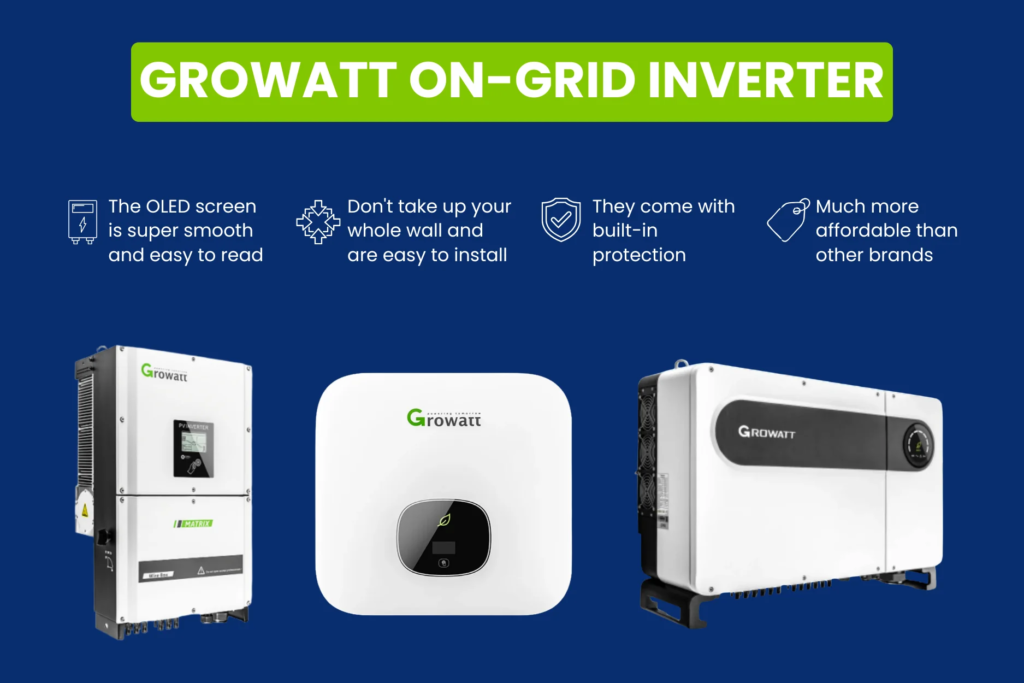
Growatt inverters have become the “sweet spot” brand for budget‑conscious but still quality‑minded Pakistani homes. They’re widely used in 3–5 kW systems for apartments and 1‑kanal houses, with strong monitoring apps and excellent Net Metering compatibility.solarexpress+3
Tescom – The underrated hybrid specialist
Tescom (often branded for off‑grid and hybrid systems) is popular among installers who want rugged, battery‑friendly inverters for homes with frequent load‑shedding. In 2026, Tescom hybrid units sit in the mid‑range price band but offer solid MPPT performance and easy integration with lithium batteries.tescom-solar+2
Huawei – The premium efficiency king
Huawei solar inverters have built a reputation for ultra‑high efficiency (up to about 98.5%) and smart grid‑friendly behavior. They’re often chosen for larger residential and small‑commercial projects where Solar ROI and Net Metering optimization are top priorities.bzmbt+3
None of these brands are “bad,” but each suits a slightly different homeowner.
Key comparison table: Growatt vs Tescom vs Huawei
This table focuses on 2026‑style 3–5 kW and 5–10 kW home systems in Pakistan. Figures are rounded to reflect real‑market performance, not just datasheets.solarpanelratesinpakistan+3
| Feature | Growatt | Tescom (Hybrid‑focused) | Huawei |
|---|---|---|---|
| Typical efficiency | ~97.5–98% | ~96–97.5% | Up to ~98.5% |
| Best‑fit system type | On‑grid, hybrid (budget‑friendly) | Off‑grid, hybrid, load‑shedding homes | On‑grid, hybrid, Net Metering‑focused |
| 5 kW inverter price (PKR) | ~185,000–230,000 | ~220,000–280,000 (hybrid) | ~320,000–380,000 |
| MPPT channels | 1–2 MPPT (good for standard roofs) | 1–2 MPPT (often simpler) | 2–3 MPPT (better shading tolerance) |
| Monitoring and app | Strong app, real‑time monitoring | Decent, app‑enabled on newer models | Very advanced AI‑style monitoring |
| Battery compatibility | Good with lithium (LiFePO₄) | Excellent with lithium and hybrid packs | Excellent; works with ESS‑style storage |
| Warranty (rough) | 5 years common, some 10‑year options | 2–5 years depending on model | 5–10 years, often 10 for flagship units |
| Best for | Middle‑class homes, budget‑ROI blend | Homes with thick blackouts, backup‑first | Elite homes, future‑proof Net Metering |
For most middle‑class families in Lahore or Rawalpindi who want maximum savings without overspending, Growatt hits the sweet spot. For homes where load‑shedding is brutal and battery backup is non‑negotiable, Tescom becomes very attractive. For premium, future‑ready homes that want top‑shelf inverter efficiency and maximum Net Metering juice, Huawei usually edges ahead.jinkosolarpanelpriceinpakistan+3
How inverter efficiency hits your Net Metering and Solar ROI
Net Metering regulations in Pakistan still allow residential customers to export excess solar generation to the grid and net it off against their imported electricity, within capacity limits (typically 5–25 kW per residence). Higher‑efficiency inverters dump more kWh into that export bucket instead of burning them as heat or weak waveforms.zerocarbon+2
Here’s a rough ROI‑style snapshot for a 5 kW hybrid‑on‑grid system with lithium batteries and 2026 NEPRA‑style Net Metering:
| Inverter brand | Approx. efficiency | Extra kWh/year vs average inverter | Annual savings (PKR) | Typical payback speed |
|---|---|---|---|---|
| Huawei | ~98.5% | +2–4% more kWh | +PKR 15,000–25,000 | 3–3.5 years |
| Growatt | ~97.5–98% | +1–2% more kWh | +PKR 12,000–20,000 | 3.5–4 years |
| Tescom (typical hybrid) | ~96–97.5% | ~Flat or +0.5–1% kWh | +PKR 5,000–12,000 | 4–5 years |
These numbers assume similar panel quality and roof layout; the real difference emerges in daily kWh totals and how much of that you can then export. In Pakistan, that means 60–80% bill reduction for well‑designed 5–10 kW systems, especially when paired with lithium batteries to smooth night‑time use.sheikhxsolarcorp+3
Which brand suits your home in 2026?
The “best” inverter depends on your budget, outage pattern, and future plans.
Choose Growatt if:
- You’re a middle‑class homeowner in Lahore, Faisalabad, or Islamabad who wants strong performance at a fair price.
- You care about smartphone‑style monitoring so you can watch your Solar ROI grow month‑by‑month.intexsolarenergy+2
- You want on‑grid Net Metering as your base, with optional lithium backup later.
Choose Tescom if:
- You live in areas with long blackouts (e.g., rural Sindh, Balochistan, or parts of Punjab DISCO territories).
- You want an inverter that plays very nicely with lithium batteries and can handle off‑grid‑ish behavior.tescom-solar+2
- You’re okay trading a bit of efficiency for robust backup performance and mid‑range pricing.
Choose Huawei if:
- You’re in an elite 1‑kanal or 2‑kanal house that wants cutting‑edge Net Metering behavior and AI‑style monitoring.
- You plan to keep this system 15–20 years and want maximum kWh harvest, especially from shaded or complex roof layouts.ratedpanels+2
- Your budget can stretch, but you want the highest inverter efficiency and long warranty as your safety net.
For most of Pakistan’s middle‑class houses, Growatt or Tescom is the practical daily winner. For forward‑looking, tech‑savvy households, Huawei is the prestige‑grade option.
Step‑by‑step guide: Picking Growatt vs Tescom vs Huawei for your roof
Here’s a no‑fluff checklist you can use with your installer—or even on your own via sunvolt.site’s comparison tools.
- Size your home system first
- Estimate load: ACs, geysers, pumps, Wi‑Fi, etc.
- Choose 3–5 kW for 5–7‑marla houses; 5–10 kW for 1‑kanal and up.sheikhxsolarcorp+1
- Decide: on‑grid, hybrid, or off‑grid (hybrid is best for most homes).
- Define your priorities
- Bill savings + Net Metering: lean toward Huawei or Growatt.
- Survival during blackouts: lean toward Tescom or hybrid Growatt.
- Future‑proofing for EVs or extra loads: Huawei’s monitoring and MPPT help a lot.
- Compare three real quotes
When you get propositions from installers, ask them to write down:- Brand and exact model (e.g., “Growatt MIN 5000‑H,” “Tescom V‑series 5k,” “Huawei SUN2000‑5K‑F”)
- Inverter efficiency (cited in datasheet)
- MPPT configuration (1 vs 2 vs 3)
- Battery type and capacity (LiFePO₄ preferred for Solar ROI)
- Warranty length and service‑support policy
- Whether Net Metering application is included in the proccess.
- Run a simple ROI sanity check
- Take one system price (inverter + panels + batteries + labor).
- Estimate monthly bill reduction (60–80% for Net Metering‑eligible systems).
- Divide total cost by annual savings to get rough payback years. Huawei’s extra efficiency might shave 6–12 months off a 5‑year payback, while Tescom’s robust backup saves you from generator fuel bills.ess-news+2
- Think about maintenence and service
- Check whether there’s a local service center or recognized dealer in your city.
- Ask about app monitoring: can you see daily kWh, exports, and battery state on your phone?
- For 2026‑style lithium batteries, make sure the inverter firmware supports cell‑level balancing and temperature management.amicapakistan+1
Following this process, the “Growatt vs Tescom vs Huawei” question becomes less emotional and more about what mathematically makes the most sense for your house, your grid, and your budget.
Common mistakes homeowners make with inverters
Here is the real talk about why your electricity bill isn’t coming down even after installation:
- Chasing only the cheapest inverter
A rock‑bottom hybrid inverter may undercut Tescom, Growatt, or Huawei on price but often skimps on efficiency, monitoring, or warranty. That can erase your Net Metering gains over time. - Ignoring future‑load planning
If you add an EV or pool pump 3–5 years later, an underpowered or feature‑weak inverter may need replacement. Higher‑end Huawei or expandable Growatt units handle upgrades more gracefully. - Poor battery‑inverter matching
Even amazing lithium batteries won’t deliver good Solar ROI if the inverter can’t manage charge‑discharge cycles properly. That’s why Tescom and Huawei hybrids often pair better with LiFePO₄ packs than generic inverters.apexsolar+1 - Overlooking monitoring and alerts
Modern apps that warn you of low MPPT strings or battery issues can prevent small faults from turning into big losses. Huawei’s AI‑style and Growatt’s app‑based monitoring score very highly here.jinkosolarpanelpriceinpakistan+1
Final verdict: Where each inverter wins in Pakistan
So, in the showdown of “Comparison: Growatt vs Tescom vs Huawei inverters in Pakistan,” who wins?
- Best overall value for middle‑class homes: Growatt. It balances efficiency, price, and Net Metering‑ready behavior in a way that fits the 90% of Pakistani rooftops looking for quick Solar ROI without luxury branding.solarexpress+3
- Best for blackout‑heavy, battery‑ready homes: Tescom. If your main fear is long outages and your real need is survival, Tescom’s hybrid‑focused designs make a lot of sense, even if efficiency is a hair lower.tescom-solar+2
- Best premium, future‑ready choice: Huawei. For elite homes that want maximum kWh harvest, AI‑style monitoring, and top‑tier Net Metering integration, Huawei’s 98.5%‑class efficiency and long warranty are hard to beat.bzmbt+3
Whichever you pick, the real win is tying it to high‑quality panels, lithium batteries where needed, and a clean Net Metering design.
Ready to pick the right inverter for your home?
If you’re still stuck between Growatt vs Tescom vs Huawei, don’t choose blindly—calculate. Head over to sunvolt.site and use the free solar inverter comparison tool to see how each brand performs on your roof, in your city, and with your monthly bill. You can also book a 1:1 consultation with a solar expert who’ll map your exact load, check your roof, and recommend the inverter that actually maximizes your Net Metering credits and inverter efficiency, not just looks good on paper.
If you share your city, monthly bill amount, and roof size, I’ll help you narrow down whether Growatt, Tescom, or Huawei is the smarter fit for your Pakistani home.
Leave a Reply