
Hey Lahore, Karachi, Islamabad, and beyond—this is your big‑brother solar consultant talking. If you’re Googling “best 5kW hybrid solar system price in Pakistan 2026,” you’re probably staring at a 40,000–60,000‑rupee electricity bill and wondering whether solar is finally worth it. Look, I get it, the upfront cost of solar is scary but here’s the real talk: with 2026 solar tech, lithium batteries, and smarter Net Metering‑style rules, a 5kW hybrid system can cut your bill by 60–70% and pay back in roughly 3–4 years. sunvolt.site is your go‑to resource for Pakistan’s transition to clean, affordable energy—let’s break down the 2026 market for 5kW hybrid systems so you know exactly what to pay, what to expect, and how to avoid overpaying.
What a 5kW hybrid system actually gives you
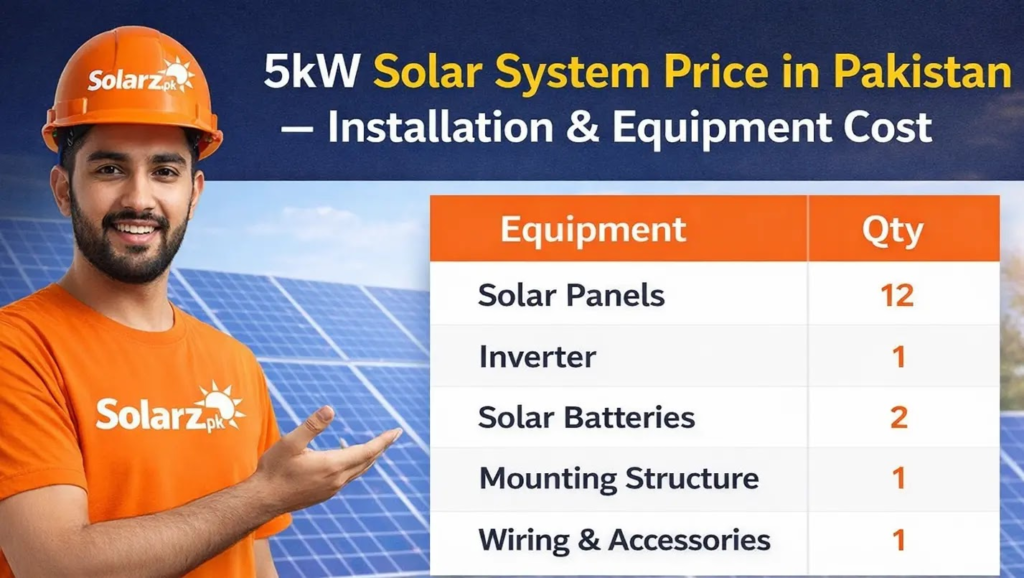
A 5kW hybrid solar system means:
- 5,000 watts of solar panels (about 16–20 panels, depending on wattage).
- A hybrid inverter that connects both to the grid and to batteries, so you can use solar by day, store it in lithium batteries by afternoon, and run critical loads at night without the generator.
- Net Metering or Net Billing‑style connection: excess can still be exported to the grid, although new NEPRA‑style “net billing” rules are starting to tilt you toward self‑consumption and battery storage rather than pure exporting.youtubebeyondgreensolaryoutube
For a typical 5–7 marla or 1‑kanal house, 5kW is the “sweet‑spot” size that covers lights, fans, one or two ACs, geysers, and fridge, while still exporting a bit during the day if you’re on grid‑tied.oespak+2
Best 5kW hybrid solar system price in Pakistan 2026 (city‑by‑city)
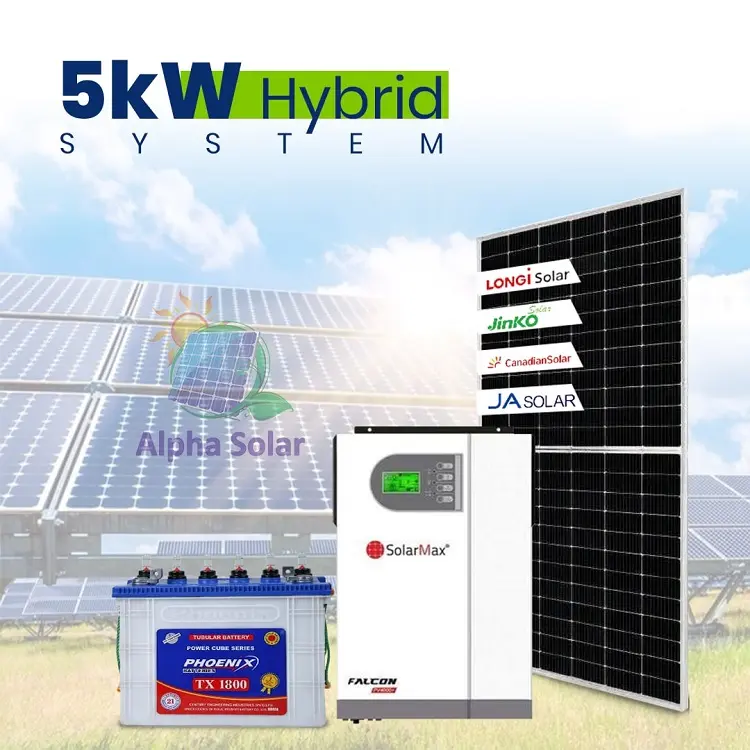
Here’s a realistic 2026 snapshot for a complete 5kW hybrid system with lithium battery backup (including panels, hybrid inverter, mounting, wiring, installation, and service‑tax). These ranges are based on current Pakistani market data and installer quotes.solar-price+2
Approximate 5kW hybrid system price (2026)
| City | 5kW Hybrid (with 4–6 kWh Li‑ion) | 5kW On‑grid (no batteries) |
|---|---|---|
| Lahore | PKR 1,080,000 – 1,480,000 | PKR 580,000 – 880,000 |
| Karachi | PKR 1,100,000 – 1,500,000 | PKR 600,000 – 900,000 |
| Islamabad/Rawalpindi | PKR 1,050,000 – 1,450,000 | PKR 550,000 – 850,000 |
| Faisalabad | PKR 1,000,000 – 1,400,000 | PKR 500,000 – 800,000 |
These numbers assume:
- Tier‑1 panels (Longi, Jinko, JA, Canadian, Trina, or Astronergy) around 35–45 PKR per watt.solarpanelprices+1
- 5kW hybrid inverter (Growatt, Huawei, Tesla HSC, or similar) roughly PKR 235,000–280,000 before markup.solarhubofficial+1
- Lithium batteries (LiFePO₄) starting around PKR 250,000–350,000 per kWh for 2026‑style home packs.youtubeapexsolar
So a “decent‑quality 5kW hybrid system with 4–6 kWh lithium” lands roughly in the PKR 1.1–1.6M band, depending on your city, panel brand, and inverter choice.alphasolar+2
Why hybrid is now smarter than pure on‑grid
With NEPRA’s 2026 “net billing” style changes, exported power is often bought at a much lower rate than the grid tariff you pay. That means:
- It’s more profitable to use solar at home during the day than to export it.
- Lithium batteries let you store that afternoon surplus and run lights, fans, and even ACs at night, reducing both your grid import and your need for a generator.
This is why hybrid systems are becoming the default choice for 5kW installations in 2026, especially for middle‑class and elite homes.beyondgreensolaryoutube+1
5kW hybrid vs on‑grid vs off‑grid: A quick table
To help you see where a 5kW hybrid system fits in, here’s a clear comparison table focusing on 2026 Pakistani homes.oespak+2
| Feature | 5kW On‑Grid (no battery) | 5kW Hybrid (battery + grid) | 5kW Off‑Grid (battery‑only) |
|---|---|---|---|
| Monthly cost (PKR) | 580,000–880,000 (Lahore) | 1,080,000–1,480,000 (Lahore) | 980,000–1,750,000 (Lahore) |
| Net Metering / Net Billing | Yes (export‑focused) | Yes + battery backup | No grid interaction |
| Battery backup | None | 4–8+ kWh (lithium preferred) | 8–15+ kWh (lithium or lead‑acid) |
| Best for | Low‑outage areas, budget‑first | Moderate‑to‑frequent blackouts, 1‑kanal | Remote houses, no grid at all |
| Inverter efficiency | ~97–98% (good brands) | ~97–98.5% (Growatt, Huawei, Tesla HSC) | ~96–98% |
| Typical Solar ROI | 4–5 years | 3–4 years (with battery self‑use) | 5–6 years (pure backup, less export) |
For most Pakistani homes, a 5kW hybrid system hits the sweet spot: you get bill‑slashing kWh, Net Metering‑style credits, and enough battery to survive frequent load‑shedding.
What’s included in a “best 5kW hybrid system” package?
When someone quotes you for the “best 5kW hybrid solar system price in Pakistan 2026,” make sure they’re including:
- Solar panels: 5,000 W of Tier‑1 panels (e.g., 550 W each = 9–10 panels).
- Hybrid inverter: 5kW, 97–98.5% efficiency, suited for Net Metering/Net Billing and lithium batteries (e.g., Growatt, Huawei, Tesla HSC‑style units).kamalsolar+1
- Battery: 4–6 kWh lithium‑ion (LiFePO₄) pack; this gives you 4–6 hours of light‑fan‑fridge backup and some AC if you’re careful.apexsolaryoutube
- Mounting, wiring, breakers, surge protection, and grid‑synchronization hardware.
- Installation, commissioning, and Net Metering/Net Billing application assistance (this is often bundled or charged separately).
- Warranty: 5–10 years on inverter, 25–30 years on panels, 5–10 years on lithium batteries.
If a quote is much lower than PKR 1.0–1.1M, they’re likely cutting corners on battery quality or using budget panels/inverters. That can hurt your Solar ROI over time.
Solar ROI and monthly savings for a 5kW hybrid system
Let’s put some numbers on the table so you see how a 5kW hybrid system behaves in 2026.youtubesolar-price+2
Assumptions (typical Lahore/Karachi home)
- System size: 5kW hybrid
- Panel efficiency + sun hours: 20–25 kWh/day (600–750 kWh/month)
- Electricity tariff: PKR 50–55 per unit
- Hybrid system price: PKR 1.2M (mid‑range)
- Lithium battery: 4–5 kWh (LiFePO₄)
Monthly and yearly impact
| Item | Value (PKR) or kWh |
|---|---|
| Monthly solar generation | 600–750 kWh |
| If 100% self‑consumption | PKR 30,000–40,000 saved per month |
| With 50–60% self‑consumption + 40–50% exporting | PKR 25,000–35,000 effective savings |
| After 1–2 years of use | 20–30% of bill may still be grid, thanks to winter clouds and heavy AC days |
Over 12 months, that’s roughly PKR 300,000–400,000 in savings—enough to push your Solar ROI into the 3–4 year range, even with a lithium battery included.solar-price+1youtubeoespak
Simple ROI table for 5kW hybrid (2026)
| Year | Annual savings (PKR) | Cumulative savings | Notes |
|---|---|---|---|
| 1 | 300,000–350,000 | 300,000–350,000 | Still paying install‑style cost |
| 2 | 320,000–380,000 | 620,000–730,000 | Repayment nearing |
| 3 | 340,000–400,000 | 960,000–1,130,000 | System effectively “paid off” |
| 5 | 380,000–450,000 | 1,700,000+ | Profit mode, leftover kWh |
These are ballpark numbers, but they show why a 5kW hybrid system is a solid long‑term bet for most Pakistani households.
Step‑by‑step: How to choose and install a 5kW hybrid system in 2026
Here’s a detailed, no‑fluff guide that you can use with your installer or even review on your own via sunvolt.site.
- Map your load and roof
- Add up your monthly units (kWh) from your bill; divide by 30 to get daily use.
- Decide what you want to run on solar: lights, fans, fridge, 1–2 ACs, TV, Wi‑Fi, etc.
- Check your roof size: 5kW needs about 40–50 square meters of clear, south‑facing space.deltaenergy+1
- Choose system type and battery size
- If you have 2–3 hours of daily load‑shedding: 5kW hybrid with 4–5 kWh lithium is ideal.
- If you have 6–8+ hours blackout: consider 6–8 kWh lithium or a larger 7–10 kW system later.
- Avoid over‑battery: 10–15 kWh just for backup kills your ROI; keep self‑consumption first.
- Pick panel and inverter brands
- Panels: Longi, Jinko, Canadian, Trina, JA, Astronergy all sit in the PKR 35–45 per watt band for 2026 quality.solarpanelprices+1
- Inverter: Look for 97–98.5% inverter efficiency; Growatt, Huawei, Tesla HSC, or similar hybrid brands are top choices for 5kW systems.solarhubofficial+1
- Battery: Lithium (LiFePO₄) is the standard for Solar ROI; ask for 5–10 year cycle‑warranty packs.
- Collect at least 3 quotes
Ask each installer to write down:- System size (5kW), panel wattage and brand, number of panels.
- Inverter model and efficiency.
- Battery capacity (kWh), chemistry (LiFePO₄ vs lead‑acid), and proccess used for grid‑synchronization.
- Total price (with and without Net Metering/Net Billing paperwork).
- Warranty and promised response time for service/maintenence.
- Run an ROI and payment‑flexibility check
- Divide your total system cost (PKR 1.0–1.6M) by your monthly savings estimate; that’s your payback.
- Ask about 0% EMI, down payment slabs, and bank tie‑ups so you don’t pay everything upfront.
- Remember: even with NEPRA’s new net billing rules, self‑consumption + lithium batteries is still the winning combo.youtubebeyondgreensolaryoutube
- Install and monitor
- Typical proccess time: 4–7 days for mounting, wiring, and inverter setup.
- Ask for a monitoring app on your phone so you can track daily kWh, battery state, and exports.
- Schedule panel cleaning every 3–4 months and annual inverter check‑ups to keep your Solar ROI high.
Common mistakes homeowners make with 5kW hybrid systems
Here is the real talk about why your electricity bill isn’t coming down even after installation:
- Under‑batterying
People go 5kW solar + 2–3 kWh of cheap lead‑acid and then complain they have no backup at night. For 2026, 4–6 kWh lithium is the realistic minimum for meaningful backup. - Over‑relying on export in a net‑billing world
With NEPRA’s lower feed‑in rates, pushing everything to the grid is no longer the smart move. A 5kW hybrid system should be designed around self‑consumption first, export second. - Choosing the cheapest inverter or panels
PKR 300,000–500,000 saved today can cost you PKR 200,000–400,000 in lost kWh over 5–10 years. Stick with Tier‑1 brands and 97%+ inverter efficiency.alphasolar+2 - Skipping proper maintenance
Dust and heat can drop your 5kW system’s output by 10–15% if you ignore cleaning and basic checks. A simple 15‑minute monthly wash and yearly service go a long way.
Final verdict: Is a 5kW hybrid system worth it in 2026?
Yes, but only if you design it right.
- For middle‑class homes (5–7 marla, 1‑kanal) with 300–700 kWh monthly bills, a 5kW hybrid system with 4–6 kWh lithium offers the best balance of cost, savings, and backup.
- For elite homes with higher AC and load, 5kW is still a great starting point; you can add another 5–10 kW layer later if you want full‑home coverage.enontraders+1
The best 5kW hybrid solar system price in Pakistan 2026 sits in the PKR 1.0–1.6M band, and the ROI window is comfortably in the 3–4 year range when you pair it with lithium batteries and smart self‑consumption habits.
Ready to get your own 5kW hybrid system?
If you’re serious about going solar, don’t just pick the cheapest 5kW hybrid package advertised on the street. Head over to sunvolt.site and use the free “Solar System Size & ROI Calculator” to see how a 5kW hybrid system will perform on your roof, in your city, and with your monthly bill. You can also book a 1:1 consultation with a solar expert who’ll:
- Help you pick between Growatt, Tesla HSC, Huawei, or Tescom‑style inverters.
- Recommend the right lithium battery size and panel configuration.
Leave a Reply