If you’re planning to run a 1.5-ton AC on solar energy in Pakistan, you’re making one of the smartest upgrades for energy savings in 2026.
But here’s the real problem: most people either oversize their system (wasting money) or undersize it (leading to constant tripping and disappointment).
This guide on how to calculate how many solar panels you need for 1.5-ton AC will help you get the exact system size based on real-world Pakistani conditions.
Look, I get it, the upfront cost of solar is scary but… running an AC on grid electricity today is even more expensive in the long run.
Let’s break it down properly.
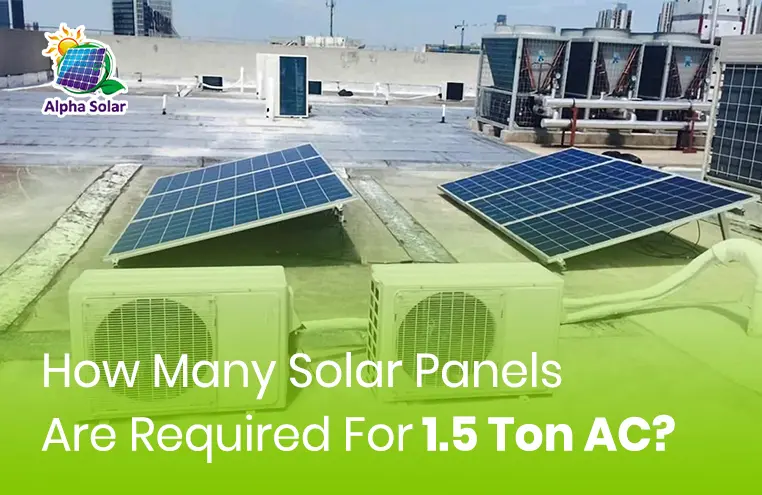
Understanding 1.5 Ton AC Power Consumption
A 1.5-ton AC is one of the most common cooling solutions in Pakistan.
Average Power Consumption:
- Non-inverter AC: 1.8 kW – 2.2 kW
- Inverter AC: 1.2 kW – 1.6 kW
Daily Usage Example:
If you run it:
- 8 hours/day → ~10–14 kWh/day
- 10 hours/day → ~12–16 kWh/day
Here is the real talk about why your electricity bill isn’t coming down: air conditioners are your biggest energy consumers in Pakistani households.
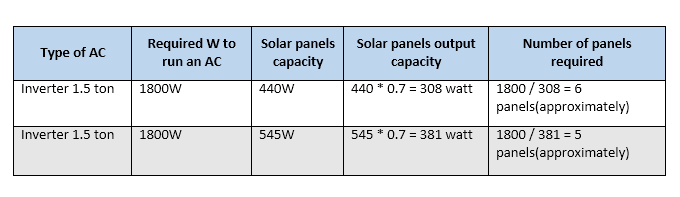
Step 1: Calculate Daily Energy Requirement
Let’s assume an inverter AC:
Formula:
Energy (kWh) = Power (kW) × Hours
Example:
- 1.5 kW × 8 hours = 12 kWh/day
So you need around:
👉 12–15 units per day
Step 2: Solar Panel Output in Pakistan (2026 Standard)
In Pakistan, modern solar panels produce:
Average:
- 550W panel = 2.2 to 2.8 kWh/day (depending on sunlight)
But real-world efficiency is affected by:
- Dust
- Heat
- Wiring losses
- Inverter efficiency
So we consider safe usable output = 2.0 kWh/day per panel
Step 3: Calculate Number of Panels Needed
Formula:
Total Energy Required ÷ Panel Output
Example:
- 12 kWh ÷ 2.0 kWh = 6 panels
Result:
👉 You need approximately 6 to 8 solar panels (550W each) for a 1.5-ton AC.
But that’s just for AC alone.
System Upgrade Recommendation (Important)
To ensure stability in Pakistan’s weather conditions:
Recommended System Size:
- Minimum: 3.5 kW system (6–7 panels)
- Ideal: 5 kW system (8–10 panels)
This ensures:
- AC backup
- Fans + lights
- Net Metering export
Comparison Table: System Sizes for 1.5-Ton AC
| System Size | Panel Count (550W) | Usage Capacity | Best For |
|---|---|---|---|
| 3.5 kW | 6–7 panels | AC only | Basic use |
| 5 kW | 8–10 panels | AC + home load | Ideal homes |
| 6+ kW | 10–12 panels | Full home | Heavy usage |
Step 4: Battery vs Net Metering Decision
Now here’s where most people get confused.
Option 1: Net Metering System (Recommended)
- No battery required
- Lower cost
- Higher ROI
Option 2: Hybrid System
- Includes Lithium batteries
- Works during load-shedding
- Higher initial cost
Option 3: Off-Grid System
- Fully battery dependent
- Not cost-effective for AC loads
Role of Inverter Efficiency in AC Load
Modern inverters (2026 models) are critical.
High-efficiency inverter benefits:
- Better AC startup handling
- Stable voltage supply
- Lower energy loss
Low-quality inverter = AC tripping issues.
Lithium Batteries & AC Running Stability
If you choose hybrid systems:
Lithium battery benefits:
- Handles high AC load
- Fast charging
- Long lifespan
But:
- Increases system cost significantly
Net Metering Impact on AC Systems
Net Metering in Pakistan allows you to:
- Export extra solar units
- Reduce electricity bill
- Offset AC consumption at night
Key advantage:
Your daytime AC usage becomes nearly “free” if system is sized correctly.
ROI Impact of Solar for 1.5-Ton AC
Let’s talk financial logic.
Monthly AC Bill (Grid):
- PKR 15,000 – 30,000 (depending on usage)
Solar System Savings:
- 70% – 90% reduction possible
ROI Table
| System Type | Monthly Savings | Payback Period |
|---|---|---|
| Grid Only | 0 | None |
| Net Metering Solar | High | 2.5 – 4 years |
| Hybrid System | Medium | 4 – 6 years |
Common Mistakes When Sizing Solar for AC
Let’s avoid expensive errors.
1. Underestimating AC Load
People calculate only daytime usage.
2. Ignoring Heat Factor
Pakistan’s heat reduces panel efficiency.
3. Choosing Low Watt Panels
Less output = system overload.
4. Ignoring Inverter Capacity
Wrong inverter = AC instability.
Yes, maintenence and system design both matter equally.
Step-by-Step System Design Guide
Let’s simplify the proccess.
Step 1:
Calculate AC daily usage
Step 2:
Choose panel wattage (prefer 550W+)
Step 3:
Select system size (5 kW recommended)
Step 4:
Decide Net Metering vs Hybrid
Step 5:
Match inverter capacity properly
Middle-Class vs Elite Solar Approach
Middle-Class Homes:
- 5 kW system
- Net Metering focus
- Basic backup usage
Elite Homes:
- 10 kW+ systems
- Hybrid + Lithium batteries
- Smart load automation
Elite setups rarely face AC performance issues.
Future of Solar AC Systems in Pakistan (2026+)
Technology is evolving:
- AI load balancing
- Smart AC integration with solar
- High-efficiency inverters (99%+ MPPT)
Soon, ACs will directly sync with solar systems.
Final Thoughts: How Many Panels Do You Really Need?
Short answer:
👉 6 to 10 solar panels (550W each) depending on usage.
Long answer:
It depends on your lifestyle, AC usage hours, and whether you want battery backup or Net Metering savings.
Your not just buying panels — you’re building an energy independence system.
And if you want accurate system sizing, expert consultation, and ROI planning, sunvolt.site is becoming Pakistan’s trusted platform for solar energy education and solutions.
Call to Action
Don’t guess your solar system size.
Visit sunvolt.site today to calculate your exact solar requirements, optimize your AC setup, and connect with certified solar experts in Pakistan.
Take action now — size your system correctly, reduce your electricity bills, and power your 1.5-ton AC efficiently with solar energy for years to come.