If you own a solar system in Pakistan, one of the most important skills you can learn is how to test solar panel output using a multimeter.
Why? Because even a small drop in panel performance can silently reduce your electricity generation, lower your Net Metering credits, and increase your dependency on the grid.
And here’s the truth most installers don’t tell you: many solar systems are not failing — they are just underperforming due to unnoticed panel issues.
Look, I get it, the upfront cost of solar is scary but… ignoring performance testing is like driving a car without ever checking fuel efficiency.
Let’s fix that properly.
What is Solar Panel Output Testing?
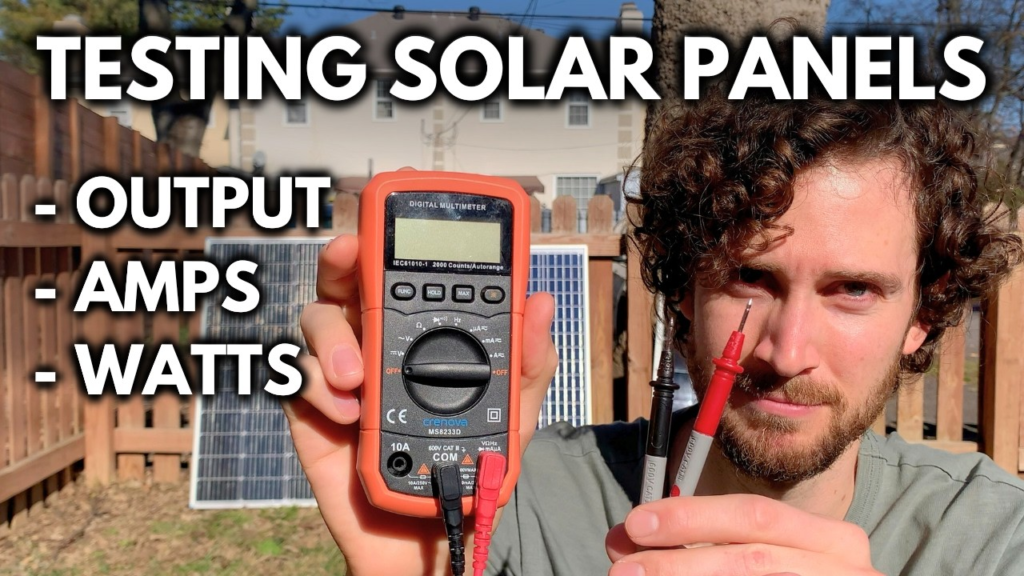
Solar panel output testing means measuring:
- Voltage (V)
- Current (A)
- Power output (W)
Using a multimeter, you can check whether your solar panels are performing as expected or not.
In simple terms:
You are checking if your panels are producing “real electricity” or not.
Why Testing Solar Panels is Important in Pakistan
Pakistan’s environment directly affects solar performance.
Common issues:
- Dust buildup
- High temperatures (Punjab & Sindh)
- Wiring losses
- Partial shading
- Bird droppings
Here is the real talk about why your electricity bill isn’t coming down: your panels may not be producing their rated output even if they look fine from the outside.
Tools Required for Testing Solar Panel Output
Before starting the proccess, gather these tools:
Essential Tools:
- Digital multimeter
- Safety gloves
- Screwdriver set
- Sunlight (very important factor)
Optional Tools:
- Clamp meter (for advanced testing)
- Data sheet of your solar panel
Safety First (Very Important)
Solar panels generate electricity even in low light.
Safety steps:
- Never touch exposed wires directly
- Avoid testing during rain
- Use insulated tools
- Wear rubber gloves
How to Test Solar Panel Output Using a Multimeter (Step-by-Step Guide)
Let’s go step by step like a professional solar technician.
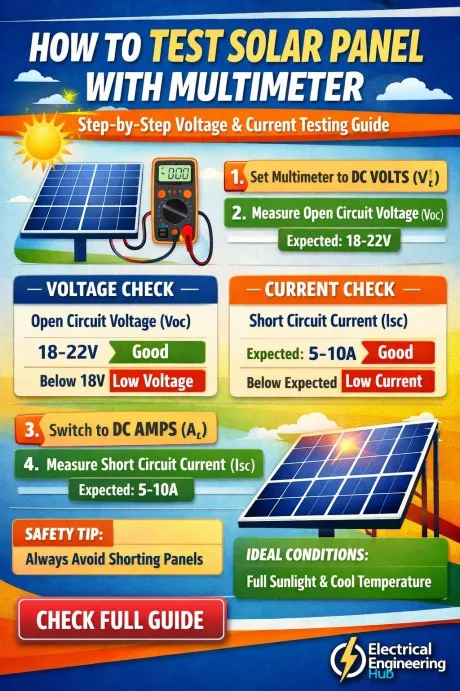
Step 1: Set Multimeter to DC Voltage Mode
- Turn dial to DC Voltage (V⎓)
- Select a range higher than panel voltage (e.g., 200V DC)
This ensures accurate readings.
Step 2: Disconnect Panel from System (If Possible)
For accurate measurement:
- Disconnect panel from inverter
- Or isolate the string
This prevents system interference.
Step 3: Place Panel in Direct Sunlight
Testing conditions matter.
Ideal conditions:
- Clear sunlight
- Noon time (11 AM – 2 PM)
- No shading
Step 4: Measure Open Circuit Voltage (Voc)
Now connect multimeter probes:
- Red probe → Positive terminal
- Black probe → Negative terminal
Expected result:
A 450W panel usually shows:
- 35V to 50V DC (approx depending on model)
Step 5: Switch to Current Mode (Optional Advanced Test)
Now measure current (A):
- Set multimeter to DC Amps
- Connect in series (carefully)
Expected result:
Depends on panel wattage:
- 8A – 12A typical range
Step 6: Compare With Panel Label Specs
Every solar panel has a label:
Check:
- Voc (Voltage open circuit)
- Isc (Short circuit current)
- Watt rating
Example:
If your panel is rated 550W but producing much less → there is a problem.
Step 7: Calculate Real Power Output
Formula:
Power (W) = Voltage × Current
Example:
- 40V × 10A = 400W output
If rated is 550W → performance is low.
Comparison Table: Expected vs Actual Solar Output
| Panel Rating | Expected Output | Normal Range | Problem Indicator |
|---|---|---|---|
| 450W | 400–450W | 350–400W | Below 350W |
| 550W | 500–550W | 420–500W | Below 420W |
| 600W | 550–600W | 450–550W | Below 450W |
Common Reasons for Low Solar Panel Output
If your readings are low, don’t panic.
Major Causes:
- Dust accumulation
- Poor wiring connections
- Inverter inefficiency
- Hot weather losses
- Panel aging
Yes, maintenence issues are more common than people think.
Role of Inverter Efficiency in Output Testing
Modern inverters (2026 models) affect output readings indirectly.
Why:
- MPPT tracking efficiency
- Voltage conversion losses
- Load balancing
Higher inverter efficiency = better usable power output.
Net Metering & Solar Output Testing
In Pakistan, Net Metering depends heavily on system output.
If output is low:
- Fewer exported units
- Reduced bill credits
- Lower ROI
If output is optimal:
- Maximum grid export
- Faster investment recovery
Lithium Batteries & Output Losses
In hybrid systems:
Poor output leads to:
- Undercharged batteries
- Reduced backup time
- System imbalance
ROI Impact of Proper Testing
Regular testing improves system performance.
ROI Comparison Table
| Condition | Output Level | Savings Level | ROI Speed |
|---|---|---|---|
| No Testing | Low | Reduced | Slow |
| Regular Testing | High | Maximum | Fast |
Middle-Class vs Elite Solar Maintenance Approach
Middle-Class Homes:
- Occasional manual testing
- Basic multimeter checks
- Reactive maintenance
Elite Homes:
- Monthly performance monitoring
- Smart energy dashboards
- Professional diagnostics
Elite users always achieve better long-term Solar ROI.
Common Mistakes When Using a Multimeter
Let’s avoid expensive errors.
1. Testing in Shade
Gives false low readings.
2. Wrong Multimeter Mode
AC mode instead of DC = incorrect data.
3. Loose Probe Contact
Leads to unstable readings.
4. Ignoring Temperature Factor
Heat reduces voltage naturally.
Maintenance Routine for Accurate Output
Let’s simplify the proccess.
Weekly:
- Visual inspection of panels
Monthly:
- Voltage test with multimeter
Quarterly:
- Full system performance check
Future of Solar Performance Monitoring (2026+)
Solar systems are becoming smarter:
- AI-based output tracking
- Remote monitoring apps
- Auto fault detection
Soon, manual multimeter testing will be less frequent — but still important for verification.
Final Thoughts: Is Multimeter Testing Worth It?
Short answer: Absolutely.
Long answer:
Learning how to test solar panel output using a multimeter gives you control over your system. Instead of guessing, you can actually verify performance and detect issues early.
Your not just measuring electricity — you’re protecting your investment and maximizing long-term savings.
And if you want deeper solar guidance, troubleshooting help, and expert system optimization, sunvolt.site is becoming Pakistan’s trusted platform for renewable energy knowledge.
Call to Action
Don’t let hidden performance losses reduce your solar savings.
Visit sunvolt.site today to learn solar testing techniques, calculate your Solar ROI, and connect with certified solar experts in Pakistan.
Take control now — test your panels, improve efficiency, and maximize your solar power generation for years to come.