If you’ve already invested in solar, you’ve taken a smart step. But here’s something most homeowners in Pakistan underestimate: dirty solar panels can reduce your energy production by up to 20–30%.
And in cities like Faisalabad, Lahore, or Karachi, dust isn’t just occasional — it’s constant.
That’s why learning how to clean solar panels at home without scratching the glass is essential if you want to protect your investment and maintain your Solar ROI.
Look, I get it, the upfront cost of solar is scary but… ignoring cleaning is like buying a new car and never washing it — performance drops over time.
Let’s walk through this step by step, the right way.

Why Cleaning Solar Panels is Critical in Pakistan
Pakistan’s environment is tough on solar systems.
Major Factors:
- Dust storms
- Pollution
- Bird droppings
- Hard water stains
These create a layer on your panels that blocks sunlight.
Result:
- Lower electricity generation
- Reduced Net Metering credits
- Higher electricity bills
Here is the real talk about why your electricity bill isn’t coming down: your panels might be dirty, not faulty.
How Dirt Affects Solar Performance
Even a thin dust layer can cause:
- 10–15% efficiency loss
- Uneven heating (hotspots)
- Long-term panel damage
Clean panels = better sunlight absorption = higher output.
When Should You Clean Solar Panels?
Timing matters more than people think.
Ideal Cleaning Frequency:
- Dusty cities → Every 2–3 weeks
- Moderate areas → Once a month
- Rainy season → Less frequent
Best Time of Day:
- Early morning
- Late evening
Never clean during peak sunlight — it can crack the glass due to sudden temperature change.
Tools You Need for Safe Cleaning
Before we jump into the proccess, gather the right tools.
Recommended Tools:
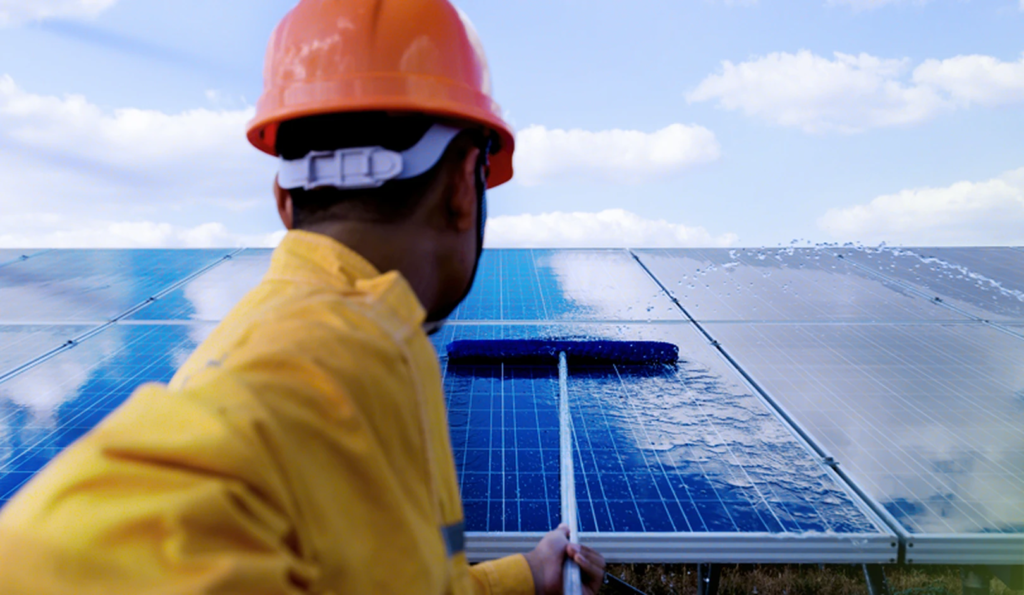
- Soft microfiber cloth
- Soft sponge
- Low-pressure water hose
- Mild soap (optional)
- Long-handle brush
Avoid:
- Hard brushes
- Detergents with chemicals
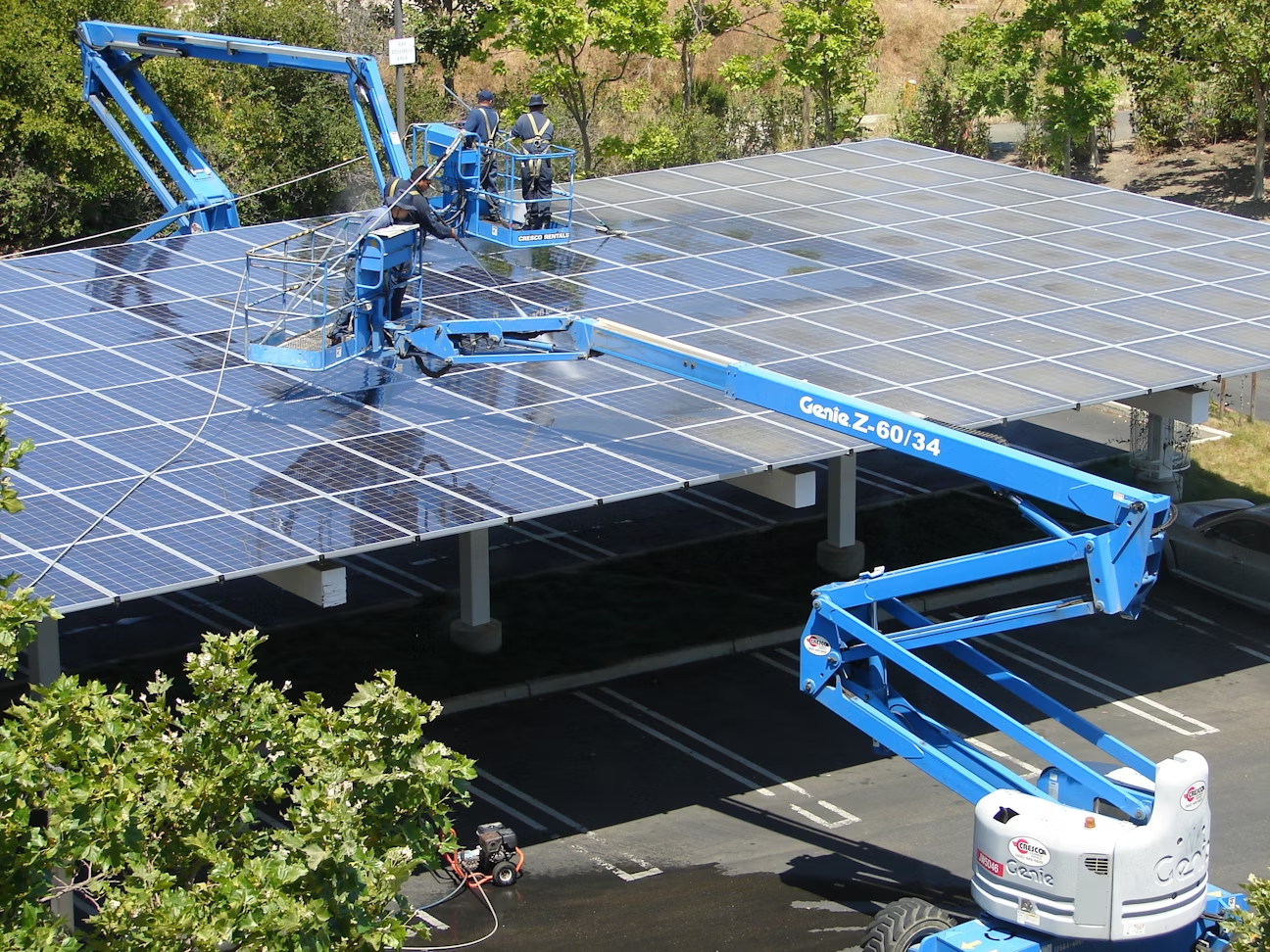
- Pressure washers
Using the wrong tools is the fastest way to scratch your panels.
Step-by-Step Guide: How to Clean Solar Panels at Home Without Scratching the Glass
Let’s keep it simple and practical.
Step 1: Turn Off Your System
Safety first.
- Switch off inverter
- Disconnect power if needed
Step 2: Remove Loose Dust
Use:
- Soft brush or cloth
Gently wipe off dry dust before using water.
Step 3: Rinse with Water
Use:
- Low-pressure hose
This helps remove surface dirt without scrubbing.
Step 4: Use Mild Cleaning Solution (If Needed)
Mix:
- Water + small amount of mild soap
Apply gently with sponge.
Step 5: Clean in Circular Motion
- Use soft cloth
- Avoid applying pressure
This prevents scratches on glass.
Step 6: Final Rinse
Wash off soap residue completely.
Step 7: Let Panels Air Dry
Avoid wiping with rough cloth.
And that’s it — simple, safe, and effective.
Common Mistakes That Damage Solar Panels
Let me save you from expensive errors.
1. Using Hard Water
Leaves mineral stains.
2. Cleaning in Direct Sunlight
Causes thermal stress.
3. Using Pressure Washers
Can damage seals and glass.
4. Scrubbing Too Hard
Creates micro-scratches.
5. Standing on Panels
Yes, people actually do this — don’t.
These mistakes reduce panel lifespan and efficiency.
Impact of Cleaning on Solar ROI
Let’s talk numbers.
Dirty Panels:
- 20% energy loss
- Lower Net Metering credits
- Increased grid usage
Clean Panels:
- Maximum output
- Faster ROI
- Lower bills
ROI Comparison Table
| Condition | Energy Output | Monthly Savings | ROI Impact |
|---|---|---|---|
| Dirty Panels | Low | Reduced | Delayed |
| Clean Panels | High | Maximum | Faster |
So yes, cleaning directly affects your wallet.
Role of Inverter Monitoring
Modern systems help you track performance.
Signs Your Panels Need Cleaning:
- Sudden drop in output
- Lower daily generation
- Inconsistent performance
Your inverter is basically telling you when cleaning is needed.
Should You Hire Professionals or DIY?
DIY Cleaning:
- Cost-effective
- Easy for small systems
- Requires basic tools
Professional Cleaning:
- Better for large systems
- Includes inspection
- Costs Rs. 2,000 – 10,000
Expert Advice:
For most homes, DIY cleaning is enough if done properly.
Cleaning Tips for Different System Types
On-Grid Systems:
- Focus on efficiency
- Regular cleaning boosts Net Metering savings
Hybrid Systems:
- Clean panels + battery efficiency matters
Off-Grid Systems:
- Cleaning is critical for daily energy supply
Middle-Class vs Elite Approach
Middle-Class Homes:
- DIY cleaning
- Basic tools
- Regular schedule
Elite Homes:
- Professional cleaning services
- Automated cleaning systems
- Maintenance contracts
Elite setups focus on convenience and consistency.
Safety Tips While Cleaning
Don’t ignore this part.
Always:
- Use stable ladder
- Wear rubber shoes
- Avoid wet rooftops
Never:
- Clean during rain
- Touch electrical components
- Work alone on high roofs
Safety first — always.
Future of Solar Panel Cleaning in Pakistan
By 2026 and beyond:
- Robotic cleaning systems are emerging
- Self-cleaning coatings are improving
- Smart monitoring will automate cleaning alerts
Pakistan is slowly catching up with global trends.
Final Thoughts: Is Cleaning Really That Important?
Short answer: Yes.
Long answer:
Cleaning your solar panels is one of the simplest and cheapest ways to improve system performance.
Your not just maintaining your panels — you’re protecting your investment and maximizing your savings.
And if you want expert advice on solar maintenance, system upgrades, or performance optimization, sunvolt.site is becoming Pakistan’s go-to platform for clean energy solutions.
Call to Action
Don’t let dust reduce your solar savings.
Visit sunvolt.site today to learn more about solar maintenence, calculate your Solar ROI, and connect with trusted experts who can help you get the most out of your system.
Take control now — clean your panels, boost your output, and maximize your energy savings.
Leave a Reply