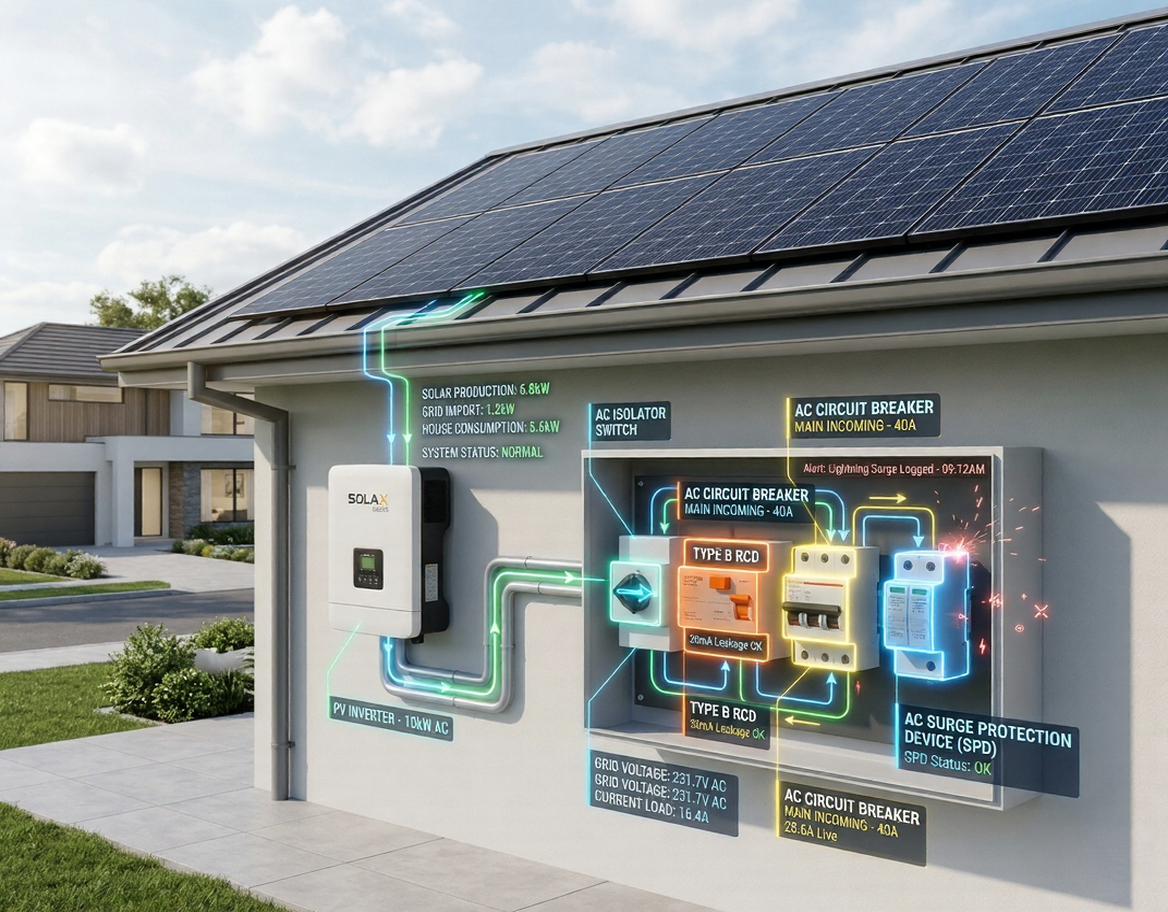
If you’ve already installed a solar system—or planning to—there’s something most installers won’t emphasize enough: protection.
Look, I get it, the upfront cost of solar is scary but what’s worse? Spending lakhs on a system and then losing your inverter in a single lightning strike or voltage surge.
Here is the real talk about why your electricity bill isn’t coming down or why your system suddenly stops working—your inverter might be taking silent damage from poor protection setup.
In this guide, I’ll walk you through exactly how to protect your solar inverter from lightning and voltage surges, based on 2026 best practices in Pakistan.
Why Inverter Protection is Critical in Pakistan
Pakistan’s electrical infrastructure isn’t exactly stable. Add to that:
- Frequent voltage fluctuations
- Sudden grid failures
- Monsoon lightning storms (especially in Punjab)
- Poor earthing in many homes
Your solar inverter—whether hybrid, on-grid, or off-grid—is constantly exposed to risk.
What Happens Without Protection?
- Inverter burnout (cost: PKR 250,000 – 800,000+)
- Reduced inverter efficiency
- Damage to Lithium batteries
- System downtime (no savings, no backup)
- Net Metering compliance issues
And trust me, once your inverter is damaged, warranty claims often get rejected if proper surge protection wasn’t installed.
Understanding Solar System Types & Risk Levels
Different systems have different exposure levels:
| System Type | Surge Risk | Lightning Risk | Protection Priority |
|---|---|---|---|
| On-Grid | High | Medium | Very High |
| Off-Grid | Medium | High | High |
| Hybrid | Very High | Very High | Critical |
On-Grid Systems
Connected to WAPDA, these are highly vulnerable to voltage surges from the grid.
Off-Grid Systems
Less grid risk but highly exposed to lightning and battery damage.
Hybrid Systems
These combine both risks—making protection absolutely essential.
Key Protection Components You Must Install
To fully protect your inverter, you need a layered approach:
1. Surge Protection Devices (SPDs)
SPDs are your first line of defense.
- Type 1 SPD: Protects against direct lightning strikes
- Type 2 SPD: Protects against switching surges
- Type 3 SPD: Fine protection for sensitive electronics
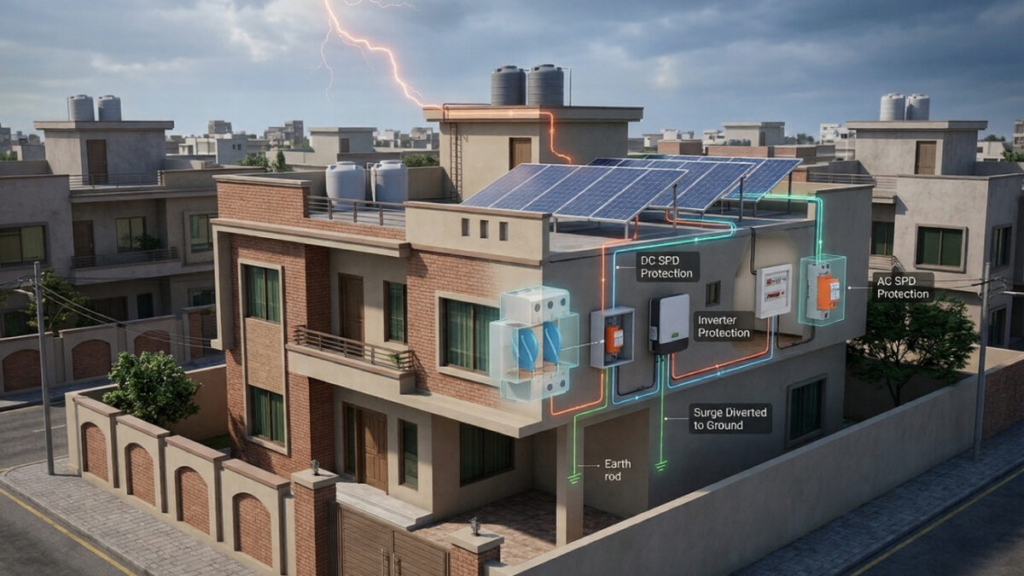
Install SPDs on both DC side (solar panels) and AC side (grid connection).
2. Proper Earthing System
No protection works without good grounding.
- Use copper rods (low resistance)
- Maintain earth resistance below 5 ohms
- Separate earthing for lightning arrestor
Bad earthing = useless protection system. Simple as that.
3. Lightning Arrestor
This diverts lightning strikes safely into the ground.
- Installed above solar panels
- Connected to dedicated earthing pit
- Essential in areas like Lahore, Faisalabad, Multan
4. Voltage Stabilizer (Optional but Recommended)
Especially useful for areas with extreme voltage fluctuations.
5. Smart Inverter Monitoring
Modern inverters (Growatt, Sunsynk) provide mobile alerts for faults and surge events.
This helps you react quickly before major damage occurs.
Step-by-Step Guide: How to Protect Your Solar Inverter
Let’s break it down into a practical, no-nonsense proccess.
Step 1: Assess Your Risk Level
Ask yourself:
- Do you live in a lightning-prone area?
- Is your grid voltage unstable?
- Do you have Net Metering installed?
If yes, you need full protection setup.
Step 2: Install DC Side SPD
- Connect between solar panels and inverter
- Use Type 2 SPD minimum
- Ensure proper polarity
Step 3: Install AC Side SPD
- Connect between inverter and main distribution board
- Protects against grid surges
Step 4: Set Up Proper Earthing
- Minimum 2–3 copper rods
- Deep installation (8–10 feet)
- Use thick copper wire
Step 5: Install Lightning Arrestor
- Mount higher than panels
- Connect to separate earthing pit
Step 6: Add Circuit Breakers & Fuses
- DC isolators
- AC breakers
- Helps in fault isolation
Step 7: Test the System
- Check earth resistance
- Test SPD functionality
- Monitor inverter alerts
Step 8: Schedule Regular Maintenence
- Inspect every 6 months
- Replace faulty SPDs
- Check earthing connections
Most people skip this—and that’s where problems start.
Cost Breakdown: Protection Setup in Pakistan (2026)
Here’s what you can expect:
| Component | Cost (PKR) |
|---|---|
| DC SPD | 8,000 – 20,000 |
| AC SPD | 6,000 – 15,000 |
| Lightning Arrestor | 10,000 – 30,000 |
| Earthing System | 25,000 – 60,000 |
| Installation | 10,000 – 25,000 |
| Total Cost | 60,000 – 150,000 |
Solar ROI Perspective
Look, protection doesn’t generate electricity—but it protects your investment.
If your inverter lasts 10–12 years instead of failing in 2–3 years, your Solar ROI improves massively.
Net Metering & Protection Requirements in 2026
DISCOs in Pakistan are tightening regulations.
For Net Metering approval, inspectors check:
- Proper earthing
- Surge protection devices
- Inverter compliance
- Safety mechanisms
Without these, your application can be delayed—or rejected.
So if you’re planning Net Metering, don’t cut corners here.
Common Mistakes Homeowners Make
Let me save you from expensive regrets:
- Installing cheap SPDs that fail instantly
- No DC-side protection (very common mistake)
- Poor earthing connections
- Skipping lightning arrestor
- Ignoring maintenence
And the biggest mistake?
Thinking “it hasn’t happened yet, so it won’t happen.”
That’s not how electricity works.
Advanced Protection Tips for Premium Homes
If you’re investing in a high-end solar system:
- Use Type 1 + Type 2 SPD combination
- Install surge protection at sub-panels
- Integrate with home automation
- Use high-end hybrid inverters with AI monitoring
- Protect Lithium batteries with dedicated BMS surge protection
This is where your system becomes bulletproof.
Final Thoughts: Protect First, Then Profit
Solar is one of the smartest investments you can make in Pakistan today. But without proper protection, it’s also one of the riskiest.
Your inverter is the heart of your system. Protect it properly, and your savings will follow.
Ignore it, and you might be replacing expensive components sooner than you think.
At sunvolt.site, we help homeowners across Pakistan build not just solar systems—but safe, reliable, and future-proof energy solutions.
Ready to Secure Your Solar Investment?
Don’t wait for a lightning strike to learn this lesson the hard way.
Visit sunvolt.site today to:
- Calculate your Solar ROI
- Get expert consultation
- Design a protected, high-efficiency solar system
Because clean energy is powerful—but only when it’s protected the right way.
Leave a Reply