Electricity bills in Pakistan have become a serious headache. Every month, tariffs go up, fuel adjustments hit harder, and suddenly your budget feels out of control. But here’s the good news: if done right, solar energy combined with Net Metering can reduce your electricity bills by up to 90%.
Look, I get it, the upfront cost of solar is scary but… the long-term savings completely change the game. This isn’t hype — it’s a practical, proven system that thousands of Pakistani households are already using.
In this guide, I’ll walk you through exactly how to reduce electricity bills by 90% using net metering, based on the latest 2026 solar technology, updated regulations, and real-world cost strategies.
What is Net Metering and How Does It Work?
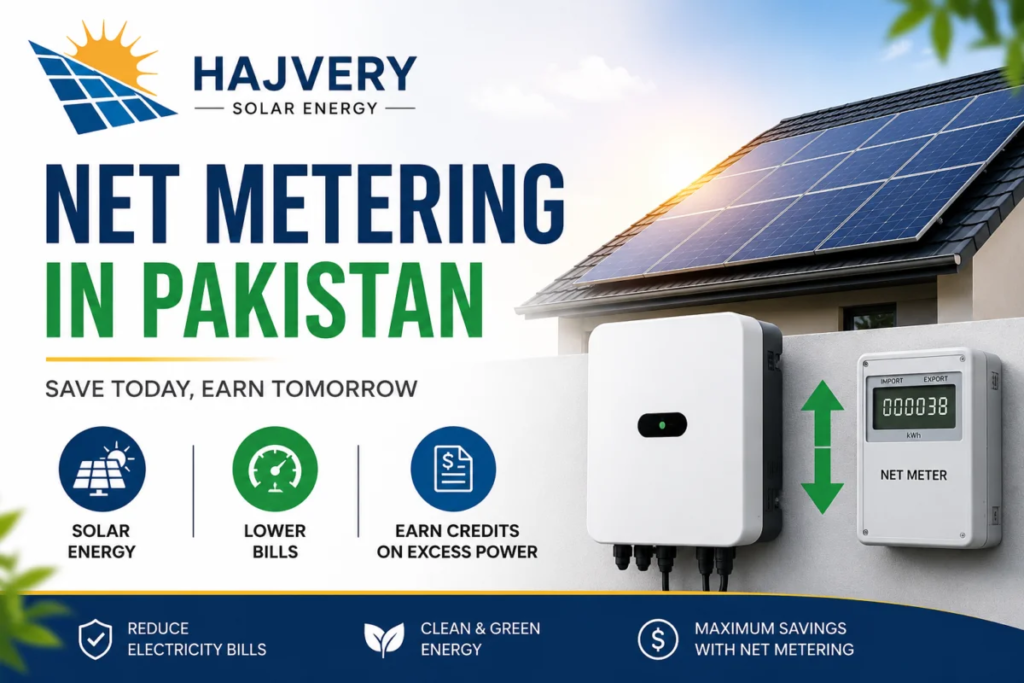
Net Metering is a billing system that allows you to generate your own electricity using solar panels and send excess energy back to the grid.
Here is the real talk about why your electricity bill isn’t coming down: without net metering, unused solar energy gets wasted. With it, your meter literally runs backwards.
Simple Breakdown:
- Solar panels generate electricity during the day
- Your home uses what it needs
- Extra electricity is exported to the grid
- You get credits on your electricity bill
At night, when you consume electricity from the grid, those credits reduce your bill — sometimes almost completely.
Why 2026 is the Best Time to Go Solar in Pakistan
Solar adoption in Pakistan has evolved massively. In 2026, three major factors are working in your favor:
1. High Electricity Tariffs
Electricity rates have crossed Rs. 60+ per unit in many slabs. This makes solar ROI faster than ever.
2. Improved Inverter Efficiency
Modern hybrid inverters now offer 98%+ efficiency, reducing energy loss and increasing savings.
3. Affordable Lithium Batteries
Lithium batteries have dropped significantly in price and offer longer life compared to traditional lead-acid options.
Types of Solar Systems (Which One is Right for You?)
Choosing the right system is critical if you want to truly reduce electricity bills by 90%.
Comparison Table: Solar System Types
| Feature | On-Grid System | Off-Grid System | Hybrid System |
|---|---|---|---|
| Net Metering | Yes | No | Yes |
| Battery Backup | No | Yes | Yes |
| Initial Cost | Low | Medium | High |
| Bill Reduction | Up to 90% | 100% (no grid use) | 90% + backup |
| Ideal For | Urban Homes | Rural Areas | Loadshedding Areas |
Expert Insight:
For most households in cities like Faisalabad, Lahore, or Karachi, an On-Grid or Hybrid system is the best choice.
How to Reduce Electricity Bills by 90% Using Net Metering
Now let’s get into the practical side — how you actually achieve those massive savings.
1. Proper System Sizing
Your system must match your monthly units consumption.
Example:
- Monthly usage: 800 units
- Required system size: ~7kW
If your system is undersized, your savings will be limited. Oversizing, on the other hand, increases ROI through export credits.
2. Install High-Efficiency Panels
Go for Tier-1 solar panels with at least:
- 550W+ capacity
- 21%+ efficiency
Better panels = more units generated = faster bill reduction.
3. Choose a Smart Hybrid Inverter
A good inverter is the brain of your system.
Look for:
- 98% efficiency
- Net Metering compatibility
- Battery integration support
Cheap inverters are a common mistake and can reduce your savings by 10–15%.
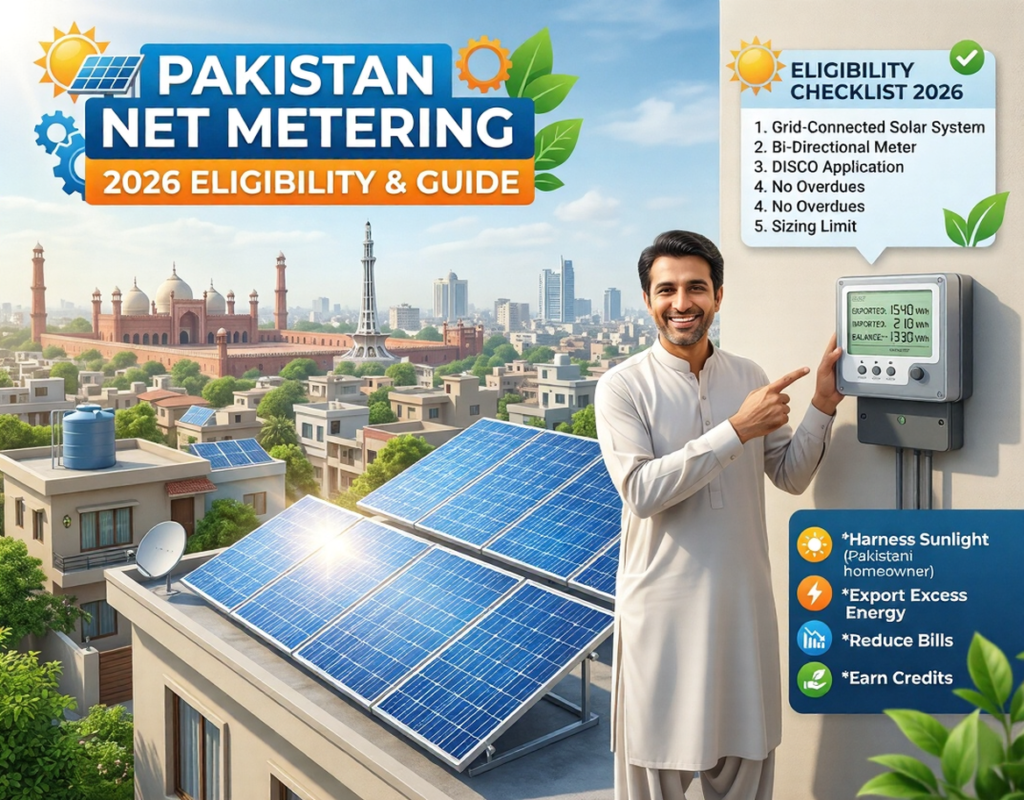
4. Apply for Net Metering License
This is the most important step.
You’ll need:
- Solar installation documents
- CNIC and electricity bill
- Application through DISCO
Once approved, a bi-directional meter is installed.
5. Optimize Daytime Usage
Use heavy appliances during the day:
- AC
- Washing machine
- Iron
This maximizes direct solar usage and reduces dependency on grid units.
Cost Analysis & ROI (Return on Investment)
Let’s talk numbers — because that’s what really matters.
Average Cost in Pakistan (2026)
| System Size | Estimated Cost (PKR) | Monthly Savings | Payback Period |
|---|---|---|---|
| 5kW | 800,000 – 950,000 | 25,000 – 35,000 | 2.5 – 3 years |
| 10kW | 1.4M – 1.7M | 50,000 – 70,000 | 2 – 3 years |
| 15kW | 2M – 2.5M | 80,000+ | 2 – 2.5 years |
After the payback period, your electricity is almost free for the next 20+ years.
Yes, maintenence costs exist — but they are minimal compared to savings.
Step-by-Step Guide to Install Solar with Net Metering
Here’s a simple roadmap you can follow:
Step 1: Energy Audit
Check your last 6–12 months of electricity bills to calculate average usage.
Step 2: Select a Reliable Installer
Choose certified solar companies with net metering experience.
Step 3: System Design
Your installer will design:
- Panel layout
- Inverter selection
- Wiring plan
Step 4: Installation Proccess
Typically takes 3–7 days depending on system size.
Step 5: Net Metering Application
Submit documents to your DISCO and wait for approval (usually 30–60 days).
Step 6: Meter Installation & Activation
Once approved, your bi-directional meter is installed and system goes live.
Common Mistakes That Reduce Savings
Avoid these if you truly want that 90% reduction:
1. Choosing Cheap Equipment
Low-quality panels or inverters reduce output and lifespan.
2. Poor Installation
Bad wiring or panel angle can reduce efficiency by 20%.
3. Ignoring Net Metering
Without it, your ROI drops significantly.
4. Not Cleaning Panels
Dust reduces output — especially in cities like Faisalabad.
Clean panels every 2–4 weeks for best performance.
Solar for Middle-Class vs Elite Homes
Middle-Class Strategy:
- Start with 5kW system
- On-grid setup
- No battery initially
This keeps costs low and still delivers major savings.
Elite Strategy:
- 10kW–20kW hybrid system
- Lithium batteries for backup
- Smart home integration
This provides energy independence and luxury comfort.
Future of Solar & Net Metering in Pakistan
The future looks extremely promising.
- Government is encouraging renewable energy
- Net Metering policies are expanding
- Solar technology is getting cheaper and smarter
If you delay, you’re basically paying higher electricity bills for no reason.
Final Thoughts: Is It Really Worth It?
Short answer: Yes — absolutely.
Long answer: If your monthly bill is above Rs. 25,000, switching to solar with net metering is one of the smartest financial decisions you can make in 2026.
Your not just saving money — you’re investing in long-term energy security.
And if you’re serious about making the switch, platforms like sunvolt.site are becoming the go-to resource for expert guidance, system comparisons, and cost-effective solar solutions tailored for Pakistani households.
Call to Action
Don’t wait for the next electricity bill shock.
Visit sunvolt.site today, calculate your solar savings, and connect with trusted experts who can help you reduce your electricity bills by 90% using net metering.
Your future self (and your wallet) will thank you.
Leave a Reply