Electric vehicles (EVs) are no longer the future—they’re already here in Pakistan. But let’s be honest, one big question still bothers homeowners:
“How do I charge my EV cheaply without getting hit by high electricity bills?”
The smartest answer? Use solar energy for EV charging at home.
Look, I get it, the upfront cost of solar is scary but pairing it with an EV is one of the most powerful ways to maximize savings. You’re basically replacing petrol costs with sunlight.
In this guide, I’ll walk you through exactly how to use solar energy for EV (Electric Vehicle) charging at home, using 2026-ready solutions tailored for Pakistani households.
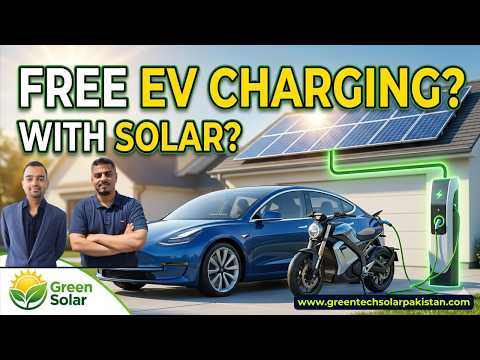
Why Solar + EV is the Ultimate Combo in Pakistan
Let’s break it down simply.
Rising Costs Problem
- Petrol prices are unpredictable
- Electricity tariffs are increasing
- Grid reliability is inconsistent
Now compare that with solar:
- Free energy after installation
- Predictable long-term savings
- Energy independence
Real Talk
Here is the real talk about why your electricity bill isn’t coming down: if you’re charging an EV from the grid alone, your consumption spikes massively.
But when you combine solar with EV charging, your Solar ROI multiplies.
How EV Charging Works at Home
Before we jump into solar integration, understand the basics.
Types of EV Chargers
- Level 1 Charger (slow, 220V standard socket)
- Level 2 Charger (fast, dedicated home charger)
- DC Fast Charger (not typical for homes)
For Pakistan, Level 2 chargers are the sweet spot.
Energy Consumption Example
- Average EV battery: 40–70 kWh
- Daily charging need: 10–20 kWh
That means your solar system must support this additional load.
Solar System Types for EV Charging
| System Type | EV Charging Suitability | Key Advantage |
|---|---|---|
| On-Grid | Good | Net Metering savings |
| Off-Grid | Limited | Works without grid |
| Hybrid | Best | Flexibility + backup |
On-Grid Systems
Best for users with Net Metering. Excess solar energy exported during day can offset EV charging at night.
Off-Grid Systems
Not ideal unless you have a large battery bank.
Hybrid Systems
The ultimate solution in 2026—combining solar, grid, and Lithium batteries for seamless EV charging.
How Many Solar Panels Do You Need for EV Charging?
Let’s make it practical.
Example Calculation
- Daily EV usage: 15 kWh
- 1 kW solar system produces ~4–5 units/day
So you need:
- 3kW system for EV charging alone
- Or add 2–4kW extra to your existing system
Pro Tip
Always oversize slightly to maintain Inverter efficiency and future-proof your setup.
Step-by-Step Guide: How to Use Solar Energy for EV Charging
Now let’s get into the actual proccess.
Step 1: Assess Your Current Solar System
Check:
- System size (kW)
- Inverter capacity
- Daily generation
If your system is already maxed out, you’ll need expansion.
Step 2: Calculate EV Charging Load
- How many km you drive daily
- Battery size
- Charging frequency
This helps determine how much solar you need.
Step 3: Upgrade Solar Capacity (If Needed)
Options:
- Add more panels
- Upgrade inverter
- Optimize system layout
Don’t just guess—calculate properly.
Step 4: Choose the Right EV Charger
- Install Level 2 charger for efficiency
- Ensure compatibility with your inverter
- Use certified equipment
Cheap chargers can damage your system.
Step 5: Integrate Charger with Solar System
- Connect charger via distribution board
- Prioritize solar usage during daytime
- Configure smart settings
Modern systems allow solar-first charging.
Step 6: Add Battery Storage (Optional but Powerful)
Using Lithium batteries:
- Store excess solar energy
- Charge EV at night
- Reduce grid dependency
This is ideal for elite households.
Step 7: Optimize with Net Metering
If you have Net Metering:
- Export excess energy during day
- Use credits to charge EV at night
This makes your EV charging almost free.
Step 8: Monitor & Optimize
Use apps like Growatt or Sunsynk:
- Track generation
- Monitor EV charging
- Adjust usage patterns
Smart monitoring = smarter savings.
Cost Analysis: Solar EV Charging Setup (Pakistan 2026)
Here’s a realistic breakdown:
| Component | Cost (PKR) |
|---|---|
| Extra Solar Panels (3kW) | 350,000 – 500,000 |
| EV Charger | 150,000 – 400,000 |
| Inverter Upgrade | 200,000 – 600,000 |
| Battery Storage | 500,000 – 1,500,000 |
Solar ROI for EV Owners
Let’s compare:
- Petrol monthly cost: 40,000 – 80,000 PKR
- Solar charging cost: Near zero
Payback period improves dramatically.
Common Mistakes to Avoid
Let me save you from expensive errors:
- Undersizing your solar system
- Charging EV during non-solar hours without planning
- Ignoring inverter capacity limits
- Using low-quality chargers
- No maintenence checks
And the biggest mistake?
Thinking solar alone will automatically handle EV charging without proper design.
Advanced Tips for 2026 Smart Homes
If you want next-level performance:
- Install AI-based energy management systems
- Use time-of-use optimization
- Integrate EV charger with solar apps
- Install bidirectional chargers (future-ready)
These upgrades turn your home into a smart energy hub.
Middle-Class vs Elite Strategy
Middle-Class Homes
- Add 2–3kW extra panels
- Use Net Metering smartly
- Avoid expensive batteries
Elite Homes
- Go hybrid system
- Install Lithium battery bank
- Use smart EV charging automation
Choose what fits your budget and goals.
Final Thoughts: Drive on Sunlight, Not Fuel
Solar + EV is not just a trend—it’s the future of energy in Pakistan.
When done right, you can:
- Eliminate fuel costs
- Reduce electricity bills
- Achieve energy independence
- Maximize Solar ROI
And honestly, there’s something powerful about driving your car using sunlight generated on your own roof.
At sunvolt.site, we help homeowners across Pakistan design smart solar systems that power not just homes—but lifestyles.
Ready to Power Your EV with Solar?
Stop paying for fuel when the sun is free.
Visit sunvolt.site today to:
- Calculate your EV solar requirements
- Get expert consultation
- Design a future-ready solar charging system
Because in 2026, the smartest drivers don’t just drive electric—they drive solar.