
Investing in solar is one of the smartest financial decisions you can make in Pakistan today. But here’s something most homeowners ignore until it’s too late: your solar panel warranty.
Look, I get it, the upfront cost of solar is scary but… imagine spending 10–20 lakh rupees and then facing a panel fault with no proper claim process. That’s where understanding solar panel warranty in Pakistan: how to claim it from dealers becomes critical.
This guide will walk you through everything — from types of warranties to real-world claim steps, based on 2026 solar market practices in Pakistan.

What is Solar Panel Warranty?
A solar panel warranty is a manufacturer’s guarantee that your panels will perform as expected for a certain period.
There are typically two types of warranties:
1. Product Warranty (Equipment Warranty)
- Covers manufacturing defects
- Usually lasts 10–15 years
- Includes physical damage due to faults
2. Performance Warranty
- Guarantees output efficiency
- Typically 25–30 years
- Ensures panels produce at least 80–85% power over time
Here is the real talk about why your electricity bill isn’t coming down: if your panels degrade faster than expected and you don’t claim warranty, your entire Solar ROI gets affected.
Why Solar Warranty Matters in Pakistan (2026)
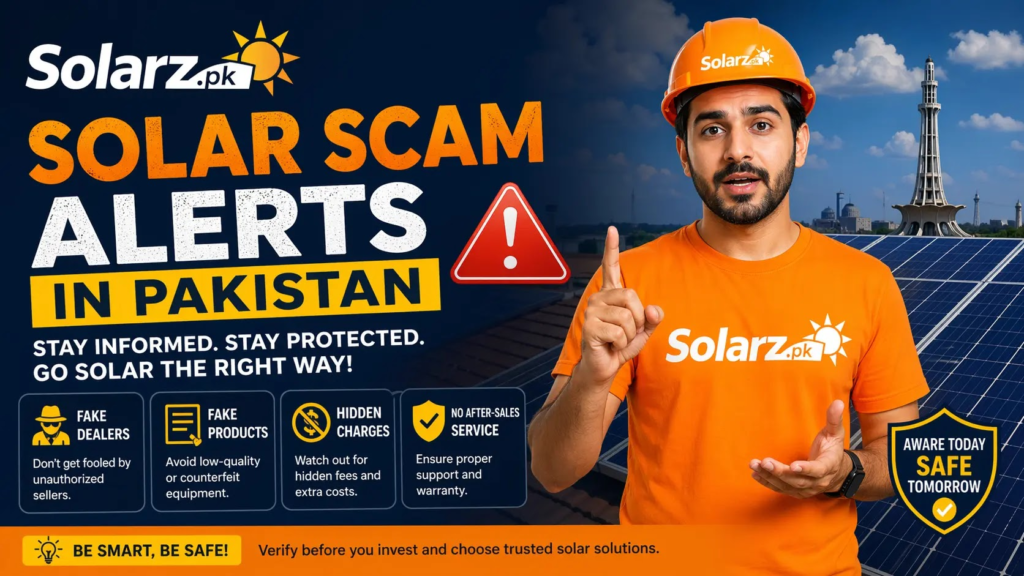
Pakistan’s solar market is booming, but not all dealers are reliable.
Key Challenges:
- Fake warranty claims
- Unauthorized dealers
- Poor documentation
- Delayed claim responses
With Net Metering systems becoming common, panel performance directly impacts your savings. A faulty panel means:
- Lower energy production
- Reduced Net Metering credits
- Higher electricity bills
So yes, warranty isn’t just paperwork — it’s financial protection.
Types of Solar Systems & Warranty Impact
Different system types influence how warranty claims work.
Comparison Table: System Types vs Warranty Complexity
| Feature | On-Grid System | Off-Grid System | Hybrid System |
|---|---|---|---|
| Panel Warranty | Standard | Standard | Standard |
| Inverter Warranty | 5–10 years | 3–7 years | 5–10 years |
| Battery Warranty | Not required | 1–3 years | 5–10 years (Lithium) |
| Claim Complexity | Low | Medium | High |
| Maintenance Need | Low | High | Medium |
Expert Insight:
Hybrid systems with Lithium batteries have more components — meaning more warranty claims potential.
What Does a Valid Solar Warranty Include?
Before you even think about claiming, you need to know what’s covered.
Covered:
- Manufacturing defects
- Early panel degradation
- Micro-cracks (if factory-related)
- Junction box failures
Not Covered:
- Physical damage (hail, fire, accidents)
- Poor installation
- Unauthorized modifications
- Voltage surges
This is where many homeowners get confused — they assume everything is covered.
Common Warranty Mistakes in Pakistan
Let me be honest — most people mess this up.
1. Buying from Unverified Dealers
Cheap deals often come with fake or non-transferable warranties.
2. Not Registering the Warranty
Some brands require online registration.
3. Losing Documentation
Invoices, serial numbers, and warranty cards are critical.
4. Poor Installation
Improper mounting voids warranty instantly.
5. Ignoring Maintenance
Dust buildup and neglect can affect claims.
Yes, maintenence matters more than people think.
Step-by-Step Guide: How to Claim Solar Panel Warranty in Pakistan
Now let’s get practical. Here’s exactly how to claim your warranty.
Step 1: Identify the Problem
Check for:
- Reduced output
- Physical defects
- Error messages in inverter
Use your inverter monitoring system to confirm performance drop.
Step 2: Gather Documentation
You’ll need:
- Purchase invoice
- Warranty card
- Panel serial numbers
- Installation details
Without these, your claim may be rejected.
Step 3: Contact Your Dealer First
In Pakistan, dealers act as intermediaries.
Provide:
- Issue details
- Photos/videos
- System performance data
A reliable dealer will initiate the claim proccess.
Step 4: Dealer Inspection
The dealer may:
- Visit your site
- Run diagnostics
- Verify installation quality
If the issue is confirmed, they forward it to the manufacturer.
Step 5: Manufacturer Evaluation
The brand reviews:
- Panel data
- Fault type
- Warranty validity
This step can take 2–6 weeks depending on the brand.
Step 6: Replacement or Repair
If approved:
- Panel is replaced or repaired
- Delivery may take time (import delays)
Step 7: Reinstallation
Dealer installs the new panel and system resumes normal operation.
Cost Analysis: Warranty vs No Warranty
Let’s talk numbers.
Scenario Without Warranty:
- Panel replacement cost: Rs. 25,000–40,000 per panel
- System loss: Reduced savings
- ROI delay: 6–12 months
Scenario With Warranty:
- Replacement cost: Free (in most cases)
- Minimal downtime
- ROI protected
This is why warranty directly impacts your long-term savings.
Role of Inverter Efficiency & Warranty
Panels aren’t the only thing covered.
Inverter Warranty:
- Typically 5–10 years
- Covers system brain
If your inverter fails:
- Entire system stops
- Net Metering benefits are lost
Always choose high-efficiency inverters with strong local support.
Lithium Batteries & Warranty Considerations
If you’re using a hybrid system:
Lithium Battery Warranty:
- 5–10 years
- Based on charge cycles
Important points:
- Avoid deep discharge
- Use compatible inverter
- Monitor battery health
Battery claims are more complex than panel claims.
How to Choose a Dealer with Reliable Warranty Support
This is where most people go wrong.
Look for:
- Authorized distributor status
- Written warranty agreement
- Local service team
- Verified customer reviews
Platforms like sunvolt.site help you connect with trusted dealers who actually honor warranties.
Middle-Class vs Elite Warranty Strategy
Middle-Class Homes:
- Focus on panel + inverter warranty
- Avoid complex systems
- Choose reliable brands
Elite Homes:
- Full system warranty coverage
- Include Lithium batteries
- AMC (Annual Maintenance Contracts)
Elite setups require more planning but offer better protection.
Future of Solar Warranty in Pakistan
In 2026 and beyond:
- Digital warranty tracking is increasing
- Blockchain-based verification may emerge
- Dealers will become more accountable
This means fewer fake claims and better customer protection.
Final Thoughts: Is Solar Warranty Really That Important?
Short answer: Yes.
Long answer: It’s not just important — it’s essential.
Your solar system is a 20–25 year investment. Without proper warranty support, your savings can disappear quickly.
Your not just buying panels — you’re buying peace of mind.
And if you want to make the right decision, platforms like sunvolt.site are helping Pakistan move toward clean, affordable, and reliable energy solutions with trusted guidance.
Call to Action
Don’t leave your investment unprotected.
Visit sunvolt.site today to compare solar brands, understand warranty terms, and connect with verified dealers who actually stand behind their products.
Make the smart move now — secure your solar system, protect your savings, and take full control of your energy future.
Leave a Reply